
Oral cancer is one of the most common cancers among men in India, and the reason is not mysterious. Smokeless tobacco — gutkha, khaini, zarda, paan masala with tobacco, and betel quid — is chewed and held against the cheek for long periods, delivering carcinogens directly onto the lining of the mouth for hours a day.
The important and hopeful part: unlike many cancers, this one develops somewhere you can see, and it is usually preceded by visible changes that appear years earlier.
The changes that come first
- Leukoplakia — a white patch that cannot be scraped off. A proportion of these become malignant over time.
- Erythroplakia — a red, velvety patch. Less common but considerably more likely to be or become cancerous. Any persistent red patch needs urgent assessment.
- Oral submucous fibrosis — strongly associated with areca nut, with or without tobacco. The tissues stiffen and scar. The first thing people notice is burning with spicy food, then a mouth that will not open as wide as it used to. This is a serious premalignant condition and it is largely irreversible, though it can be halted.
That last one deserves emphasis, because it is common in areca-chewing populations and is often dismissed. If you cannot open your mouth as wide as you could a year ago, that is a finding, not a nuisance.
What to look and feel for
Check monthly in a mirror — cheeks, gums, under the tongue, the sides of the tongue and the palate. See a dentist for anything that persists more than two weeks:
- An ulcer that does not heal
- A white or red patch that will not rub off
- A lump or thickening anywhere in the mouth, or in the neck
- Persistent numbness of the lip or tongue
- Unexplained bleeding, difficulty swallowing, or a hoarse voice
- A tooth that becomes loose without gum disease to explain it
- Reduced mouth opening
Early-stage oral cancer is often painless. Waiting for pain is waiting too long, and it is the single commonest reason cases present late.
Stopping
The risk falls after cessation, substantially over several years. Combining tobacco with alcohol multiplies risk well beyond either alone, so reducing both matters more than reducing one. Practical measures that help: set a date, remove supplies from pockets and vehicles, substitute the oral habit with saunf, elaichi or sugar-free gum, and tell the people you spend the day with. Government helplines and nicotine replacement are available and worth using.
Ask to be examined
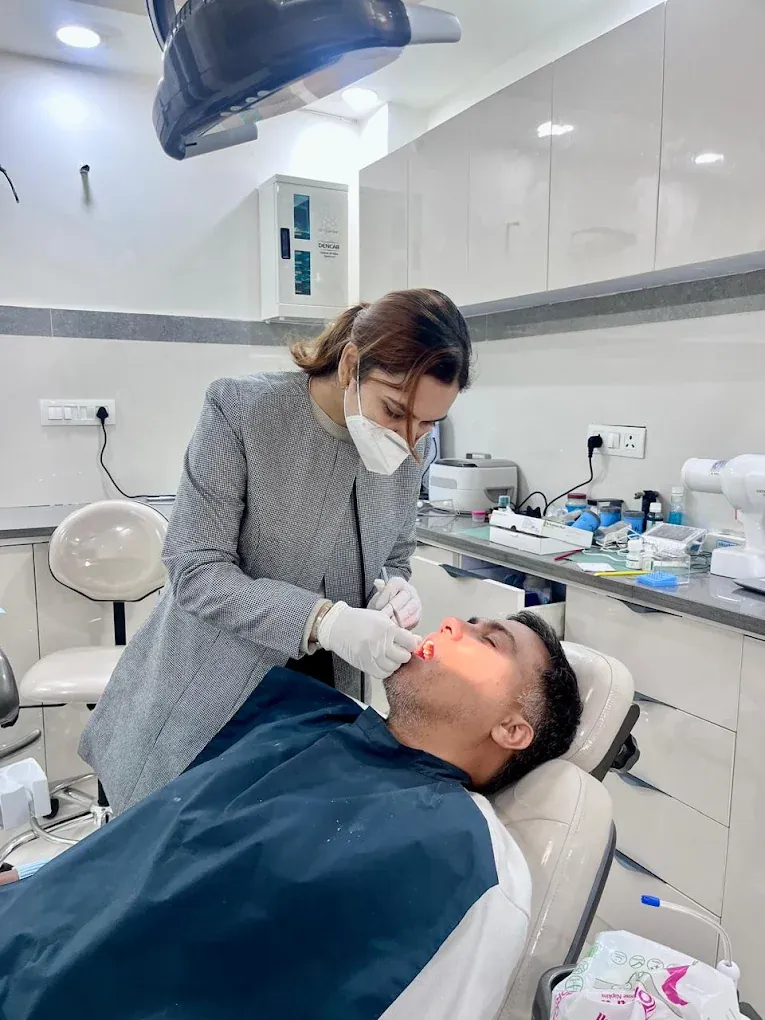
A soft-tissue examination takes about a minute and is part of every check-up here — we look at the cheeks, tongue, floor of the mouth and palate, and feel the neck. If you use tobacco in any form, say so; it changes what we look for and how often you should be seen. Nobody will lecture you, but we would much rather find something at the patch stage.
Frequently asked questions
Is gutkha safer than smoking?
No. Smokeless tobacco carries its own carcinogens and holds them directly against the cheek lining for long periods. It is strongly associated with oral cancer and with submucous fibrosis, which smoking is not.
What does early oral cancer look like?
Most often a painless ulcer that does not heal within two weeks, or a white or red patch that cannot be rubbed off. Painlessness is exactly why it gets ignored.
Why can't I open my mouth wide any more?
Progressive difficulty opening, especially with burning on spicy food, suggests oral submucous fibrosis, strongly linked to areca nut. It is premalignant and needs assessment rather than waiting.
Does the risk go away if I quit?
It falls substantially over the following years, though it does not return immediately to that of someone who never used tobacco. Quitting is the single most effective thing you can do, at any age.
Talk to a dentist in Dehradun
Anything in the mouth that has not healed in two weeks should be looked at. If you would like this looked at, it is what we do every day at Vital Dental Care & Implant Center, Haripuram Colony, 2 GMS Road, Engineers Enclave, Kanwali, Dehradun, Uttarakhand 248001 — close to Vasant Vihar, Kamla Palace, Chaman Vihar, Majra and Niranjanpur (how to reach us).
- Consulting hoursSunday to Friday, 10:00–14:00 and 16:00–20:00. Closed Saturday.
- Treating dentistDr. Pragati Singh, B.D.S., M.D.S. — Endodontist
- Appointments92868 98353 or WhatsApp
Related: Mouth ulcers, how often to get checked, gum care.