Most babies get their first tooth between six and ten months, though anywhere from three to fourteen months can be entirely normal. The order is more consistent than the timing.
The usual order
- 6–10 months — lower central incisors, the two front teeth at the bottom.
- 8–12 months — upper central incisors.
- 9–13 months — upper lateral incisors, then lower laterals.
- 13–19 months — first molars.
- 16–22 months — canines, often the most uncomfortable.
- 25–33 months — second molars.
All twenty milk teeth are usually through by around three years. A rough guide: subtract six from the age in months for the expected number of teeth.
What teething genuinely causes
Drooling, chewing on everything, sore or slightly swollen gums, irritability, disturbed sleep, and a mild rise in temperature — typically under 38°C. That is the honest list.
What it does not cause
This matters more than the list above. Teething does not cause high fever, diarrhoea, vomiting, a rash over the body, cough or a runny nose that lasts. Research following infants day by day has been consistent on this. Attributing those symptoms to teething is the reason infections sometimes get missed in babies. If your child has a fever above 38°C or seems genuinely unwell, that needs a doctor, not a teething gel.
What helps
- A clean, chilled — not frozen — teething ring. Frozen objects can damage the gum.
- Gentle gum pressure with a clean finger or a damp gauze.
- A cold, hard vegetable stick for babies already on solids, under supervision.
- Paracetamol at the correct weight-based dose if the child is genuinely distressed.
- Wipe the drool to prevent a chin rash.
What to avoid
Avoid teething gels containing choline salicylate, which is aspirin-related and not recommended in children. Avoid benzocaine products in infants. Avoid amber teething necklaces entirely — they are a strangulation and choking risk with no evidence of benefit. Avoid rubbing anything sweet, honey included, on the gums, and never dip a dummy in honey or sugar.
Start cleaning before the first tooth
Wipe the gums with a clean damp cloth after feeds from the start. Once the first tooth appears, brush twice daily with a smear of fluoride toothpaste on a soft infant brush. Do not put a baby to bed with a bottle of milk or juice — milk pools around the upper front teeth overnight and causes the pattern of decay we still see regularly in toddlers.
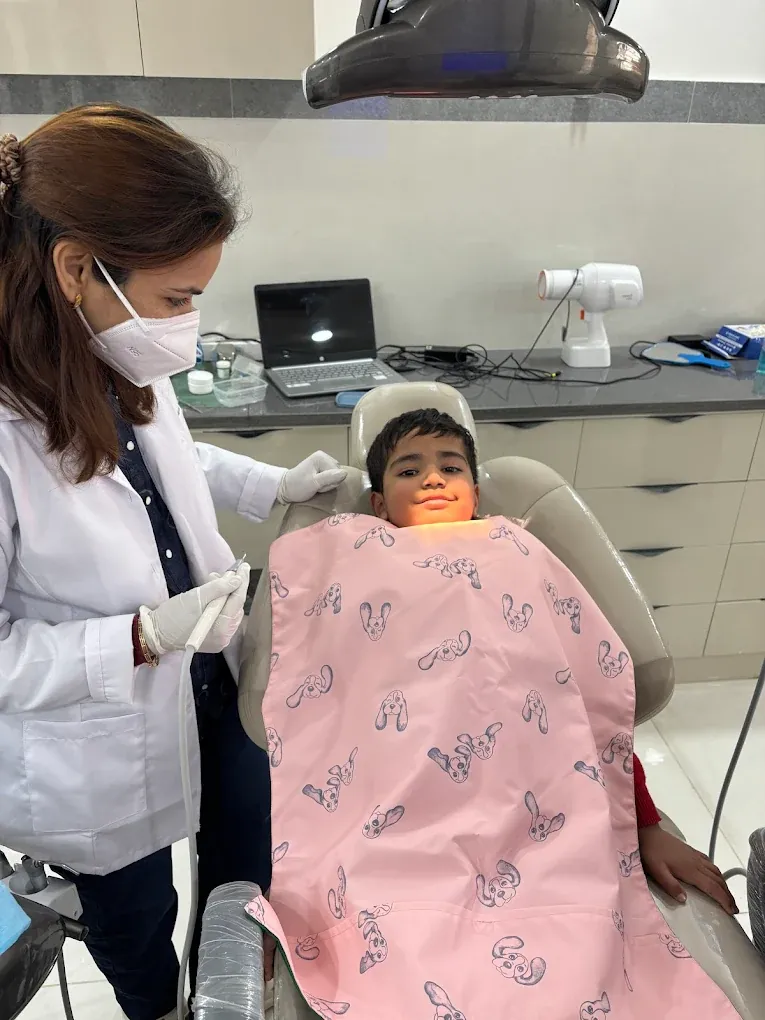
The first dental visit should be by the first birthday, or within six months of the first tooth. It is short, it is mostly about advice, and it makes every later visit easier.
Frequently asked questions
Can teething cause fever and diarrhoea?
No. Teething may raise temperature very slightly, but a fever above 38 degrees Celsius, diarrhoea or vomiting are caused by something else. Blaming teething is how genuine infections get missed.
My baby is 13 months with no teeth. Is that a problem?
Usually not. Anywhere up to about 14 months can be normal, and late eruption often runs in families. If there is still nothing by 18 months it is worth a check to rule out missing teeth.
Are amber teething necklaces safe?
No. They carry a real strangulation and choking risk and there is no evidence they relieve teething. Paediatric bodies advise against them.
When should my child first see a dentist?
By the first birthday, or within six months of the first tooth appearing. The visit is brief and mostly advice, but it establishes the habit and catches early decay while it is still reversible.
Talk to a dentist in Dehradun
A first dental visit by age one makes every later visit easier. If you would like this looked at, it is what we do every day at Vital Dental Care & Implant Center, Haripuram Colony, 2 GMS Road, Engineers Enclave, Kanwali, Dehradun, Uttarakhand 248001 — close to Vasant Vihar, Kamla Palace, Chaman Vihar, Majra and Niranjanpur (how to reach us).
- Consulting hoursSunday to Friday, 10:00–14:00 and 16:00–20:00. Closed Saturday.
- Treating dentistDr. Pragati Singh, B.D.S., M.D.S. — Endodontist
- Appointments92868 98353 or WhatsApp
Related: When milk teeth come and go, cavities in milk teeth, children's dentistry.