
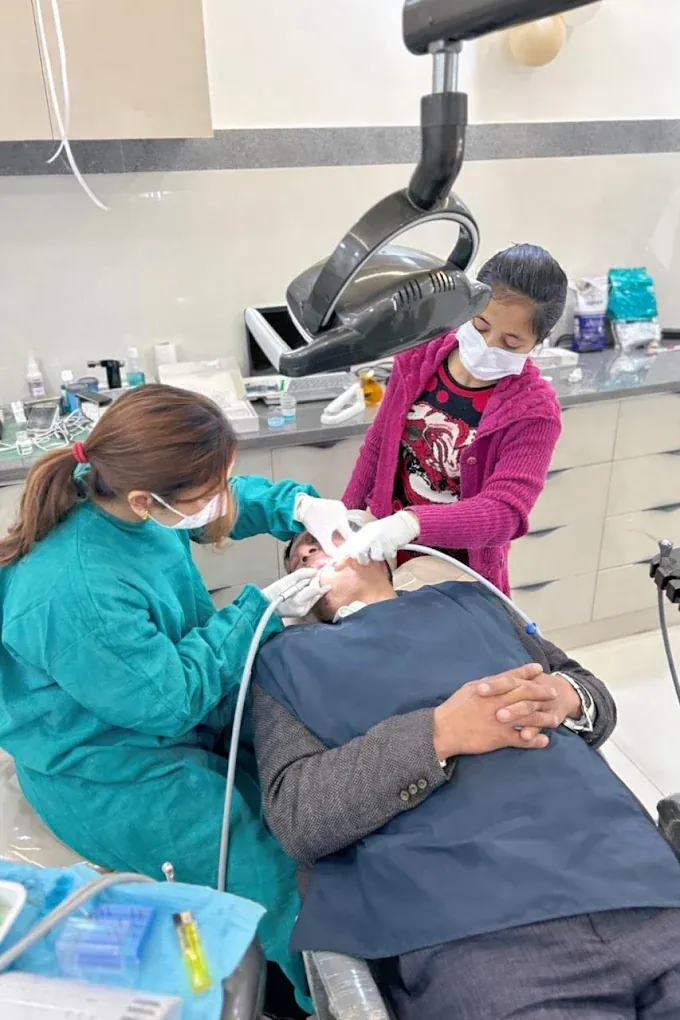
Persistent bad breath — halitosis — is one of the few dental complaints people are genuinely embarrassed to raise. It is worth raising, because in around nine cases out of ten the cause is inside the mouth and can be found and dealt with in a single appointment.
Where the smell actually comes from
The odour is produced by anaerobic bacteria — bacteria that live without oxygen — breaking down protein and releasing volatile sulphur compounds. That is the same family of chemistry that makes rotten eggs smell. Those bacteria need somewhere sheltered to live, and the mouth offers several options.
- The back of the tongue. The single most common site. The coating there holds bacteria and food debris.
- Gum pockets. Gum disease creates spaces around the teeth that a brush cannot reach.
- Untreated decay. A cavity is a sheltered hole packed with bacteria and trapped food.
- Old or failing fillings and crowns with gaps where food collects.
- Dry mouth. Saliva is the mouth's own cleaning system. Less saliva means more smell — which is why breath is worst on waking.
- Food debris under bridges or dentures that are not cleaned underneath.
The causes that are not dental
If your mouth is genuinely healthy and the problem persists, it is worth looking further: chronic sinusitis and post-nasal drip, tonsil stones, acid reflux, uncontrolled diabetes (a distinctly sweet, acetone-like smell), and some liver and kidney conditions all present this way. Certain medicines cause dry mouth as a side effect and produce halitosis indirectly.
Why mouthwash is not the answer
Most mouthwashes mask odour with mint and alcohol. The alcohol then dries the mouth, which reduces saliva, which makes the underlying problem worse a few hours later. If you use a rinse, choose an alcohol-free one, and treat it as an addition to cleaning rather than a replacement for it.
What genuinely works
- Clean your tongue. A tongue scraper, used gently from back to front, removes more odour-causing bacteria than anything else you can do at home.
- Clean between your teeth daily. Smell the floss. If it smells, that is the source.
- Drink water through the day and avoid constant sipping of sweet drinks.
- Get the tartar removed and any decay treated. Gum pockets and cavities cannot be cleaned at home.
- Chew sugar-free gum when your mouth feels dry — it stimulates saliva.
How to test yourself honestly
You cannot smell your own breath; the brain filters constant smells out. Lick the inside of your wrist, let it dry for ten seconds, and smell it. Or scrape the back of your tongue with a spoon and smell the residue. Both are unpleasant and both are accurate.
If you have cleaned your tongue properly, cleaned between your teeth daily for two weeks, and the smell is still there, something in the mouth needs finding. That is a dental examination rather than a shopping problem.
Frequently asked questions
Can bad breath come from the stomach?
Rarely. The oesophagus is normally closed, so stomach odours do not travel up continuously. Reflux can contribute, but around 85 to 90 per cent of persistent bad breath originates in the mouth itself.
Why is my breath worst in the morning?
Saliva flow drops while you sleep, so the mouth dries and bacteria multiply undisturbed for several hours. Morning breath is normal. Breath that smells through the day is not.
Will a professional cleaning cure my bad breath?
If the cause is tartar, gum pockets or decay, yes — often noticeably within days. If the cause is a coated tongue, the cleaning helps but daily tongue cleaning is what maintains it.
Do tonsil stones cause bad breath?
Yes, and they are commonly missed. They are small calcified deposits in the tonsil crypts with a very distinctive smell. If your mouth is clean and the smell persists, ask to have your tonsils looked at.
Talk to a dentist in Dehradun
Bad breath almost always has a specific, findable cause. If you would like this looked at, it is what we do every day at Vital Dental Care & Implant Center, Haripuram Colony, 2 GMS Road, Engineers Enclave, Kanwali, Dehradun, Uttarakhand 248001 — close to Vasant Vihar, Kamla Palace, Chaman Vihar, Majra and Niranjanpur (how to reach us).
- Consulting hoursSunday to Friday, 10:00–14:00 and 16:00–20:00. Closed Saturday.
- Treating dentistDr. Pragati Singh, B.D.S., M.D.S. — Endodontist
- Appointments92868 98353 or WhatsApp
Related: Bleeding gums, teeth cleaning & gum care, stages of tooth decay.