
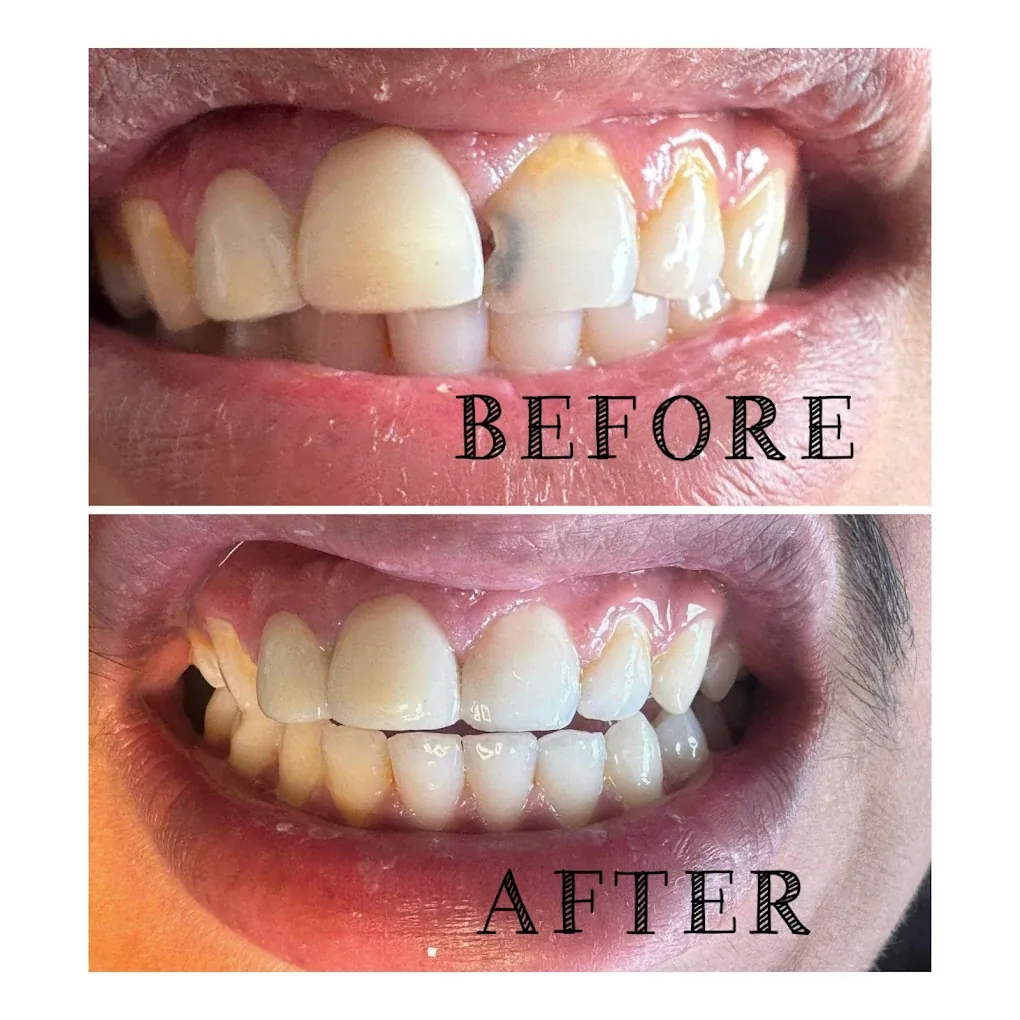
Straight teeth are the exception rather than the rule. The underlying reason is simple arithmetic: teeth are inherited largely from one side of a family and jaw size from the other, and when large teeth land in a small jaw there is not enough room. Everything else is secondary.
The main causes
- Genetics. Tooth size, jaw size and jaw shape are all strongly inherited.
- Early loss of milk teeth. Milk teeth hold space. Lose one at four to decay and the neighbouring teeth drift into the gap, leaving the permanent tooth with nowhere to go.
- Prolonged thumb sucking or dummy use past about four years.
- Mouth breathing. Chronic nasal blockage means the tongue sits low instead of resting against the palate. The palate then narrows, because nothing is pushing outwards against the cheek muscles.
- Tongue thrust on swallowing, which pushes the front teeth forwards.
- Wisdom teeth, a contested factor. They are often blamed for late lower-front crowding; the evidence is weaker than the folklore.
- Natural late crowding. Lower front teeth tend to crowd slightly through the twenties and thirties in almost everyone, which is why retainers are recommended indefinitely.
The softer diet argument
Archaeological jaws show markedly less crowding than modern ones. One well-supported explanation is that jaws developed under the mechanical load of a tough, fibrous diet, and modern processed food provides far less stimulus for that growth. Teeth have stayed the same size while jaws have got smaller. It is not something you can reverse in an individual, but it explains why crowding is so common now.
Why it is worth correcting
Beyond appearance, crowded teeth are harder to clean, so plaque accumulates in places a brush cannot reach, and decay and gum disease follow. A bad bite concentrates chewing force on a few teeth, wearing and cracking them, and can contribute to jaw joint pain. Protruding upper front teeth are significantly more likely to be broken in a fall or a sporting knock.
The age that matters
Around seven. By then the first permanent molars and front teeth are usually through, which is enough for an orthodontist to see how the bite is developing — while there is still growth to work with. Crossbites, severe crowding and jaw discrepancies are all far easier to correct while the jaws are still growing than after they have stopped.
That does not mean braces at seven. Most children assessed at seven are simply reviewed periodically and treated in their early teens. But a small number benefit greatly from early intervention, and those are the ones worth identifying.
Adults can be treated at any age. Teeth move throughout life — that is the entire premise of orthodontics. Treatment takes somewhat longer once growth has finished, and gum health has to be stable first, but age itself is not a barrier.
Frequently asked questions
Do wisdom teeth push the other teeth crooked?
It is commonly claimed but poorly supported. Lower front crowding increases with age in most people, including those who never developed wisdom teeth. They are not usually removed for that reason alone.
Can crooked teeth be fixed without braces?
Mild cases can be improved with clear aligners, and cosmetically camouflaged with veneers or bonding. Genuine crowding, however, needs the teeth moved, which means orthodontics of some kind.
What is the best age for a first orthodontic check?
Around seven. Most children are then simply monitored until their early teens, but crossbites and jaw discrepancies are far easier to correct while the jaws are still growing.
Is it too late to straighten teeth at 40?
No. Teeth move at any age, and adult orthodontics is routine. Treatment takes a little longer and gum health must be stable first, but age alone is not a barrier.
Talk to a dentist in Dehradun
An orthodontic assessment at seven identifies the few children who benefit from early treatment. If you would like this looked at, it is what we do every day at Vital Dental Care & Implant Center, Haripuram Colony, 2 GMS Road, Engineers Enclave, Kanwali, Dehradun, Uttarakhand 248001 — close to Vasant Vihar, Kamla Palace, Chaman Vihar, Majra and Niranjanpur (how to reach us).
- Consulting hoursSunday to Friday, 10:00–14:00 and 16:00–20:00. Closed Saturday.
- Treating dentistDr. Pragati Singh, B.D.S., M.D.S. — Endodontist
- Appointments92868 98353 or WhatsApp
Related: Braces and aligners, thumb sucking, braces cost in Dehradun.