
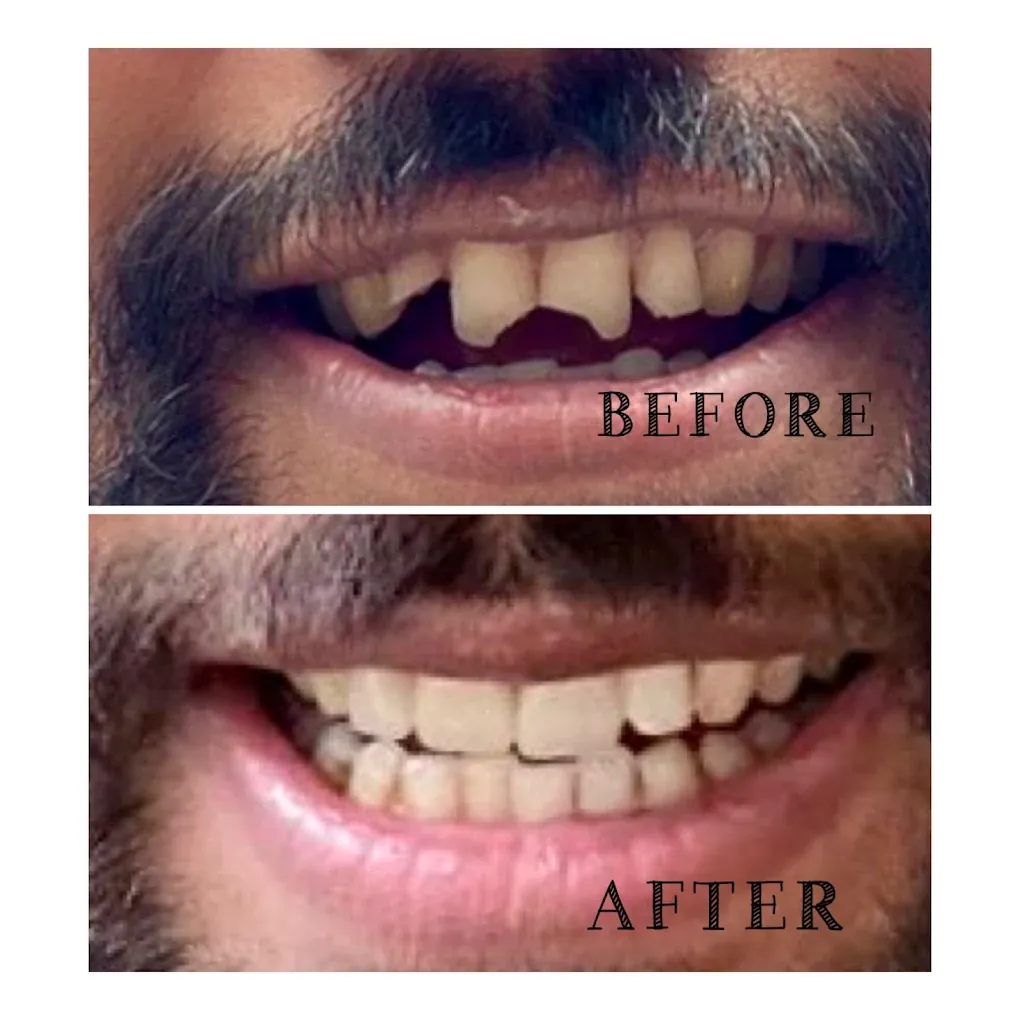
The most common misconception about dentures is that once they fit, they are done. In fact the jawbone that supported the natural teeth continues to resorb after the teeth are gone, most quickly in the first year and slowly for the rest of your life. The denture stays the same shape while the mouth beneath it changes, so the fit drifts.
Cleaning, properly
- Rinse after every meal.
- Brush daily with a soft denture brush and mild soap or denture cleaner — not toothpaste. Ordinary toothpaste is abrasive and scratches acrylic; those scratches then hold stain and bacteria.
- Brush over a basin of water or a folded towel. Dentures shatter easily on a hard floor.
- Soak overnight in water or a denture solution. Acrylic warps if it dries out. Never use hot water — it distorts them permanently.
- Clean your mouth too, even with no teeth: brush the gums, palate and tongue with a soft brush to stimulate circulation and reduce thrush.
- Take them out at night unless specifically told otherwise. The tissue needs several hours a day without pressure.
- Never use bleach on a denture with metal parts, and never scrub with anything abrasive.
Signs the fit has gone
Slipping when you talk or laugh; sore spots that keep returning; needing more and more adhesive; food packing underneath constantly; a change in the way your face looks, with the lower face appearing shorter; clicking; or difficulty with foods you used to manage.
Denture adhesive is meant to add confidence to a denture that already fits. If you cannot manage without it, or you are using progressively more, the denture needs attention rather than more glue.
Relining versus remaking
A reline resurfaces the fitting side of the existing denture to match the changed shape of your gum. It is much cheaper than a new denture and is typically needed every two to three years. A rebase replaces all the acrylic base while keeping the teeth. A full remake is needed when the teeth are worn flat, the acrylic is cracked or heavily stained, or the bite has changed too much for relining to correct. Most complete dentures need remaking roughly every five to seven years.
Problems worth reporting
A sore spot that persists more than a few days needs adjusting — it takes minutes and prevents an ulcer. Red, sore tissue under an upper denture is usually denture stomatitis, a thrush infection, and it is treatable. Any white or red patch, or an ulcer lasting over three weeks, needs examining. Wearing a denture does not remove the need for check-ups; the tissues underneath still need screening once a year at minimum.
The alternative worth knowing about
An implant-retained overdenture uses two or more implants to clip a denture firmly in place. It costs more than a conventional denture but stops the slipping, restores far more chewing force, and slows the bone loss that makes conventional dentures progressively harder to wear. For anyone struggling with a lower denture in particular — which is the harder one to keep stable — it is worth asking about.
Frequently asked questions
Can I sleep with my dentures in?
It is better not to. The gum tissue needs several hours without pressure each day, and leaving dentures in overnight substantially raises the risk of denture stomatitis, a fungal infection of the palate.
Why do my dentures suddenly not fit?
The jawbone under a denture resorbs continuously once teeth are lost. The denture has not changed — your mouth has. A reline usually restores the fit without a full remake.
Can I use regular toothpaste on my dentures?
No. Toothpaste is abrasive enough to scratch denture acrylic, and those scratches trap stain and bacteria. Use mild soap or a proper denture cleaner with a soft denture brush.
How long do dentures last?
Typically five to seven years for a complete denture, with a reline every two to three years in between. Worn-flat teeth, cracks, or a changed bite are the signs it is time for a remake.
Talk to a dentist in Dehradun
A denture that needs more and more adhesive needs relining, not more adhesive. If you would like this looked at, it is what we do every day at Vital Dental Care & Implant Center, Haripuram Colony, 2 GMS Road, Engineers Enclave, Kanwali, Dehradun, Uttarakhand 248001 — close to Vasant Vihar, Kamla Palace, Chaman Vihar, Majra and Niranjanpur (how to reach us).
- Consulting hoursSunday to Friday, 10:00–14:00 and 16:00–20:00. Closed Saturday.
- Treating dentistDr. Pragati Singh, B.D.S., M.D.S. — Endodontist
- Appointments92868 98353 or WhatsApp
Related: Crowns, bridges and dentures, implant, bridge or denture?, implants.