
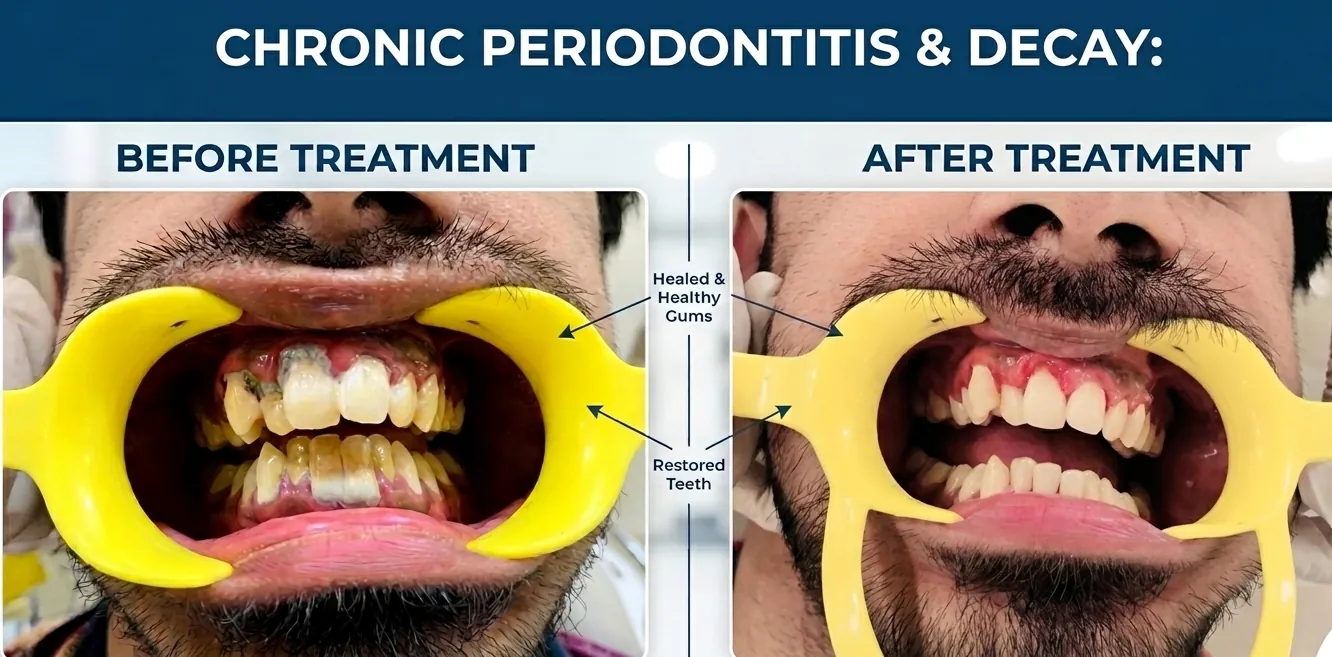
Gum disease is often described as the sixth complication of diabetes, alongside eye, kidney, nerve, heart and foot problems. What makes it unusual is that the traffic runs in both directions: diabetes makes gum disease worse, and gum disease makes diabetes harder to control.
How diabetes affects the gums
- Higher glucose in saliva and gum fluid feeds the bacteria in plaque.
- Small blood vessels thicken, so oxygen and immune cells reach the gums less efficiently and waste clears more slowly.
- White cell function is impaired, weakening the response to infection.
- Collagen repair slows, so damaged gum and bone rebuild poorly.
- Dry mouth is common, and saliva is the mouth's natural defence.
The result: people with poorly controlled diabetes get gum disease more often, more severely, and progress faster. Risk is roughly two to three times higher.
How the gums affect diabetes
This is the part that surprises people. Periodontitis is a chronic infection, sometimes with a total inflamed surface area comparable to the palm of your hand. That inflammation releases cytokines into the bloodstream which increase insulin resistance — making glucose harder to control regardless of diet or medication.
Studies of periodontal treatment in people with type 2 diabetes have shown reductions in HbA1c in the region of 0.3 to 0.4 percentage points at three months. That is a modest but real effect, comparable to adding a medication, achieved by treating the mouth.
What to watch for
Bleeding gums, persistent bad breath, gums pulling away from the teeth, teeth that feel loose or have shifted, recurring gum abscesses, slow healing after any dental work, and dry mouth or burning sensation. Oral thrush is also more common when sugar is high.
What to do
- Tell your dentist you have diabetes, along with your most recent HbA1c and your medications. It genuinely changes how treatment is planned.
- Be seen every three to four months rather than every six, if there is any gum involvement.
- Clean between your teeth daily. Non-negotiable with diabetes.
- Book morning appointments, when blood sugar is typically more stable, and eat and take medication as normal beforehand.
- Treat infection promptly. Any infection pushes blood sugar up, which impairs healing, which prolongs the infection.
- Tell your physician if you are having gum treatment — your glucose readings may shift as the inflammation settles.
Implants and extractions with diabetes
Both are routinely done. Well-controlled diabetes has implant success rates close to those of people without diabetes. Poor control is the issue, not the diagnosis: healing slows and infection risk rises. We assess control before planning surgery, and may ask you to work with your physician first. That is caution, not refusal.
Frequently asked questions
Can treating gum disease lower my blood sugar?
It can help. Trials of periodontal treatment in type 2 diabetes have shown HbA1c reductions of roughly 0.3 to 0.4 percentage points. It supports your diabetes care rather than replacing any of it.
How often should someone with diabetes see a dentist?
Every three to four months if there is any gum disease, rather than the usual six. Even with healthy gums, twice yearly is a minimum.
Can I have dental implants if I am diabetic?
Usually yes, where blood sugar is reasonably controlled. Success rates are then close to normal. Poorly controlled diabetes raises the risk of failure, so control comes first.
Why does my mouth feel dry since being diagnosed?
Raised blood glucose increases fluid loss, and several diabetes medications reduce saliva. Dry mouth raises decay risk sharply, so mention it — there are effective saliva substitutes and fluoride measures.
Talk to a dentist in Dehradun
Gum treatment is part of diabetes care, not separate from it. If you would like this looked at, it is what we do every day at Vital Dental Care & Implant Center, Haripuram Colony, 2 GMS Road, Engineers Enclave, Kanwali, Dehradun, Uttarakhand 248001 — close to Vasant Vihar, Kamla Palace, Chaman Vihar, Majra and Niranjanpur (how to reach us).
- Consulting hoursSunday to Friday, 10:00–14:00 and 16:00–20:00. Closed Saturday.
- Treating dentistDr. Pragati Singh, B.D.S., M.D.S. — Endodontist
- Appointments92868 98353 or WhatsApp
Related: Bleeding gums, gum treatment, dental implants.