
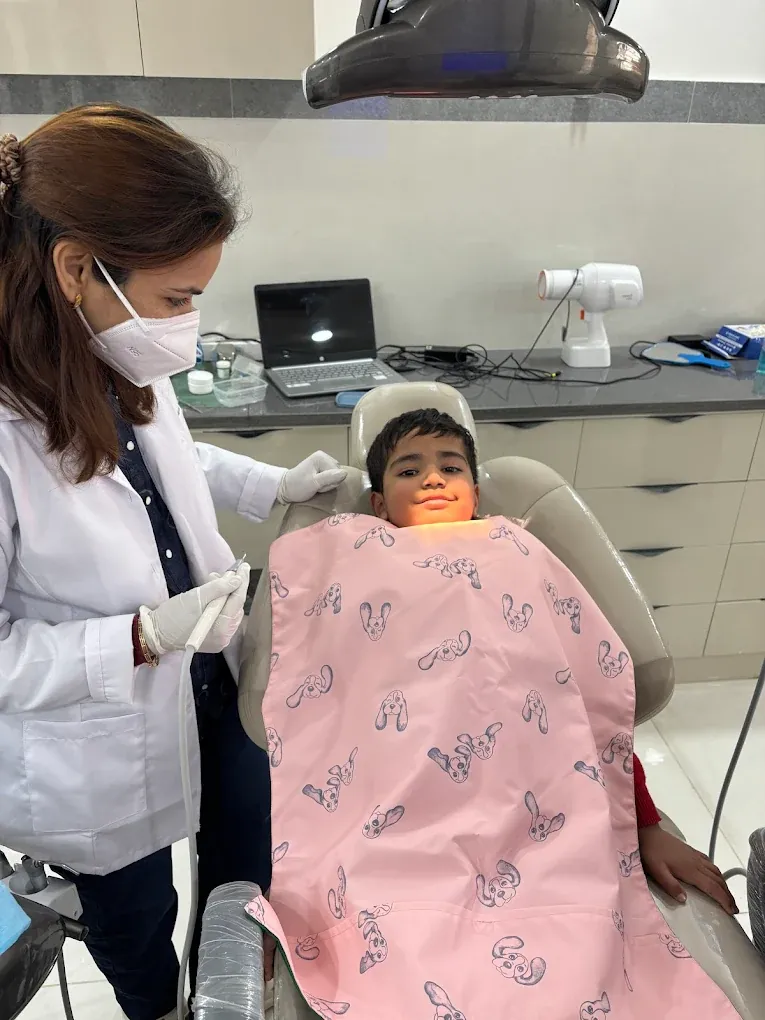
Fluoride is the most studied ingredient in dentistry, and the evidence that it reduces decay is about as settled as evidence gets. It also generates more anxiety than almost any other dental topic. Both of those things can be true, and the resolution is dose.
How it works
Fluoride does three things. It incorporates into the enamel surface as fluorapatite, which dissolves at a lower pH than normal enamel — meaning the tooth resists acid attack better. It speeds remineralisation, helping calcium and phosphate return to early damaged enamel. And it interferes with the metabolism of the bacteria that produce that acid.
The critical point, established over decades of research, is that this works topically — through contact with the tooth surface. That is why the toothpaste matters far more than what you swallow, and why spit, do not rinse is such useful advice.
Dental fluorosis: the real risk
This is where the genuine concern lies. If a child swallows too much fluoride while the permanent teeth are still forming — roughly up to age six — the enamel can develop faint white flecks or lines. In more marked cases, brown mottling and surface pitting.
Most fluorosis in practice is mild and cosmetic only. The sources are usually swallowed toothpaste, fluoride supplements given without checking the water supply, and naturally high-fluoride groundwater. Parts of India, including areas of Uttarakhand and Rajasthan, do have naturally elevated fluoride in groundwater, so it is a fair question to ask locally — if you rely on a borewell, having the water tested is sensible before adding any supplement.
The right amount
- Under 3 years: a smear, the size of a grain of rice, at 1000 ppm fluoride.
- 3 to 6 years: a pea-sized amount, supervised, and taught to spit rather than swallow or rinse.
- Over 6 and adults: a pea-sized amount of 1350–1500 ppm toothpaste, twice daily.
- High decay risk: a prescription-strength paste may be appropriate.
Practical measures: store toothpaste out of reach — children like the taste and will eat it — avoid strongly flavoured children's pastes that encourage swallowing, and do not give fluoride supplements without a dentist assessing the water supply first.
The claims that do not hold up
Fluoride at the concentrations used in toothpaste has not been shown to cause cancer, thyroid disease or bone disease. Skeletal fluorosis is a real condition, but it results from prolonged ingestion of very high concentrations, typically from contaminated groundwater, and not from brushing. Reviews by major health bodies have repeatedly examined these claims and not supported them.
If you would rather avoid it
That is your decision to make. If you do, understand that you are removing your main daily protection, so the rest has to work harder: rigorous cleaning between the teeth, genuinely controlled sugar frequency, and more frequent check-ups. Hydroxyapatite toothpastes are an emerging alternative with promising early data, though a much smaller evidence base than fluoride's.
Frequently asked questions
Is fluoride toothpaste safe for children?
Yes, in the right amount. A rice-grain smear under three and a pea-sized amount from three to six, supervised, with the child taught to spit rather than swallow. The risk comes from swallowing excess, not from brushing.
What is dental fluorosis?
Faint white flecks or lines in enamel caused by swallowing too much fluoride while the permanent teeth are forming, before about age six. Most cases are mild and purely cosmetic.
Should my child take fluoride supplements?
Not without checking your water supply first. Some groundwater in India is naturally high in fluoride, and adding supplements on top is exactly how fluorosis occurs. Ask us before starting any.
Does swallowing toothpaste matter?
For adults, occasionally swallowing a little is not a concern. For children under six it does matter, because their permanent teeth are still forming. Supervise brushing and teach spitting early.
Talk to a dentist in Dehradun
Fluoride works by contact with the tooth, so what matters is the paste, not what you swallow. If you would like this looked at, it is what we do every day at Vital Dental Care & Implant Center, Haripuram Colony, 2 GMS Road, Engineers Enclave, Kanwali, Dehradun, Uttarakhand 248001 — close to Vasant Vihar, Kamla Palace, Chaman Vihar, Majra and Niranjanpur (how to reach us).
- Consulting hoursSunday to Friday, 10:00–14:00 and 16:00–20:00. Closed Saturday.
- Treating dentistDr. Pragati Singh, B.D.S., M.D.S. — Endodontist
- Appointments92868 98353 or WhatsApp
Related: Cavities in milk teeth, correct brushing, stages of tooth decay.
At the clinic: Kids' dental care in Dehradun.