
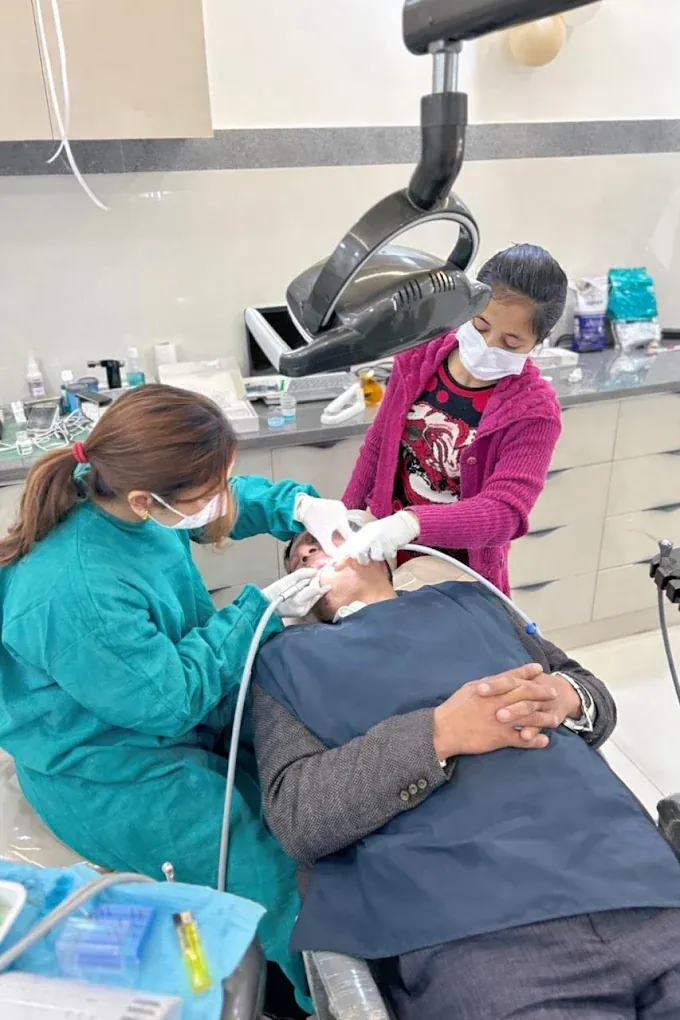
“Single sitting RCT” is advertised everywhere, which understandably makes people wonder whether it is a shortcut. It is not. The research comparing one-visit and multi-visit root canal treatment has been broadly consistent for years: success rates are comparable, and post-operative pain is similar too.
Why one visit became possible
Three things changed. Rotary instruments shape canals in a fraction of the time hand files took. Electronic apex locators measure canal length precisely without repeated X-rays. And better irrigation protocols disinfect the canal system more effectively during the appointment. Together they let the cleaning, shaping and sealing that once needed two or three visits be done well in about an hour.
When a single visit suits
- A tooth with an inflamed but still living nerve — the classic lingering-pain case
- No swelling and no discharging sinus
- Canals that can be located and negotiated fully
- You can sit comfortably for the time it takes
When two visits are the better choice
- Active infection with swelling, where the tooth needs to be dressed with medicament and allowed to settle
- A discharging sinus that has not resolved
- Re-treatment of a previously failed root canal, where old filling material must be removed first
- Severely curved or calcified canals that take longer to negotiate safely
- Persistent wetness in the canal that will not dry, which makes a proper seal impossible
A dentist who stops and dresses the tooth in those situations is doing the right thing, not selling you an extra appointment. Forcing a single visit on an actively infected tooth is how flare-ups happen.
What actually decides success
Not the number of visits. Success comes down to finding every canal — missed canals are the commonest cause of failure — cleaning to the correct length, disinfecting thoroughly, sealing completely, and crowning the tooth afterwards. That last step is not optional on back teeth: a root canal treated molar without a crown is markedly more likely to split, and a split tooth usually cannot be saved.
What to expect afterwards
Mild tenderness on biting for a few days is normal as the ligament around the root settles; an anti-inflammatory handles it. Severe pain, swelling or a raised feeling when you bite should be reported rather than endured.
Frequently asked questions
Is a single sitting root canal as successful as multiple visits?
Research comparing them consistently finds similar success rates for suitable cases. The number of visits matters far less than finding every canal, cleaning to the correct length and sealing properly.
Why did my dentist want two appointments?
Usually active infection with swelling, a discharging sinus, re-treatment of an old root canal, or canals that will not dry. In those cases dressing the tooth and allowing it to settle is the safer approach.
How long does a single visit root canal take?
Commonly 45 to 60 minutes for a straightforward tooth. Molars with three or four curved canals take longer.
Do I still need a crown after a single sitting root canal?
On back teeth, yes. The tooth loses its internal blood supply and becomes brittle, so full coverage protects it from splitting. Front teeth can sometimes be restored with a filling.
Talk to a dentist in Dehradun
One visit or two is a clinical decision, not a shortcut. If you would like this looked at, it is what we do every day at Vital Dental Care & Implant Center, Haripuram Colony, 2 GMS Road, Engineers Enclave, Kanwali, Dehradun, Uttarakhand 248001 — close to Vasant Vihar, Kamla Palace, Chaman Vihar, Majra and Niranjanpur (how to reach us).
- Consulting hoursSunday to Friday, 10:00–14:00 and 16:00–20:00. Closed Saturday.
- Treating dentistDr. Pragati Singh, B.D.S., M.D.S. — Endodontist
- Appointments92868 98353 or WhatsApp
Related: Root canal treatment, root canal cost, painless RCT.