
Routine cleaning and deep cleaning are priced differently because they are different treatments, and knowing which one you need explains most quotes.
Scaling and polishing
The routine appointment. An ultrasonic tip vibrates hardened tartar off the tooth surfaces above and just below the gumline, then a polish removes the surface film that stains pick up. It usually takes 20 to 40 minutes and is the least expensive treatment on any dental price list. For most people it is due every six months.
Root planing, or deep cleaning
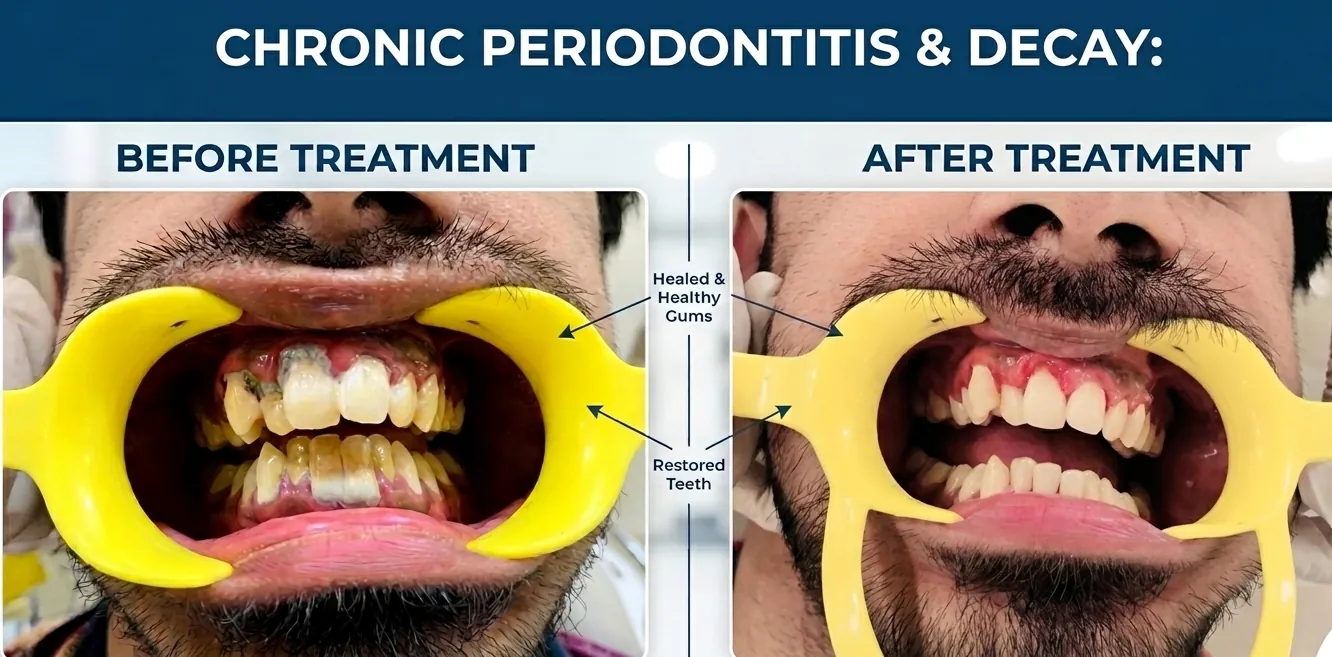
A different procedure with a different price. Where gum disease has opened pockets around the teeth, the root surfaces inside those pockets have to be cleaned smooth — below the gum, usually under local anaesthetic, and normally over two or more visits covering a quarter or half the mouth at a time. It costs more because it takes far longer and requires anaesthesia.
If you have been quoted for a deep cleaning, ask to be shown your pocket depths. Healthy gums measure 1 to 3 mm. Deep cleaning is appropriate where pockets are 4 mm and deeper, and you are entitled to see the numbers rather than take it on trust.
The myths worth dispelling
“Scaling loosens teeth.” It does not. What it removes is tartar filling a space that gum disease had already created. The tooth was never being held by the tartar. Teeth can feel briefly odd afterwards because the tartar splinting them is gone, and gums shrink slightly as inflammation settles.
“Scaling creates gaps.” The gaps were already there, hidden.
“Scaling damages enamel.” Ultrasonic scaling removes calculus, not tooth. Enamel is considerably harder than the deposits being removed.
“Once you start, you have to keep doing it.” You need it because tartar keeps forming, not because cleaning caused it.
Sensitivity afterwards
Common for a few days, especially if a lot of tartar came off near the gumline, because root surface that was covered is now exposed to cold. A desensitising toothpaste and avoiding very cold drinks for a week settles it. Sensitivity that lasts more than a couple of weeks is worth mentioning.
Why it is the best value in dentistry
A routine cleaning costs a fraction of a filling, and a small fraction of the root canal, crown or extraction that untreated gum disease and decay eventually lead to. Gum disease is also almost entirely painless until it is advanced — by which time the bone loss cannot be reversed. Two appointments a year is the cheapest insurance available.
Frequently asked questions
Does scaling damage or weaken teeth?
No. Ultrasonic scaling removes hardened calculus, which is far softer than enamel. Teeth may feel slightly odd for a few days because the tartar that was splinting them has gone, and gums settle as inflammation reduces.
How often should I get my teeth cleaned?
Every six months for most people. Three to four monthly if you smoke, have diabetes, have had gum disease, or form tartar quickly.
What is the difference between cleaning and deep cleaning?
Routine scaling cleans above and just below the gumline. Deep cleaning, or root planing, cleans the root surfaces inside gum pockets, usually under local anaesthetic and over more than one visit, so it costs more.
Will my teeth look whiter after cleaning?
Often noticeably, because surface staining from tea, coffee and tobacco is removed. It does not change the natural shade of the teeth, which is what whitening does.
Talk to a dentist in Dehradun
Ask to be shown your gum pocket measurements before agreeing to deep cleaning. If you would like this looked at, it is what we do every day at Vital Dental Care & Implant Center, Haripuram Colony, 2 GMS Road, Engineers Enclave, Kanwali, Dehradun, Uttarakhand 248001 — close to Vasant Vihar, Kamla Palace, Chaman Vihar, Majra and Niranjanpur (how to reach us).
- Consulting hoursSunday to Friday, 10:00–14:00 and 16:00–20:00. Closed Saturday.
- Treating dentistDr. Pragati Singh, B.D.S., M.D.S. — Endodontist
- Appointments92868 98353 or WhatsApp
Related: Teeth cleaning and gum care, bleeding gums, gum treatment options.